Building a custom marketplace with Shopify Collective starts with a foundation most merchants already trust. Collective lets Shopify stores sell each other’s products without holding inventory, and it syncs orders, payments, and tracking automatically inside the admin you already use. For a retailer testing complementary products, or a supplier opening a new sales channel, that removes most of the operational weight multi-brand commerce used to carry.
The feature is native to Shopify, free for eligible stores, and built around verified merchants rather than anonymous third-party suppliers. That single design choice shapes how it performs, who it suits, and where it eventually runs out of room.
What Shopify Collective Actually Is
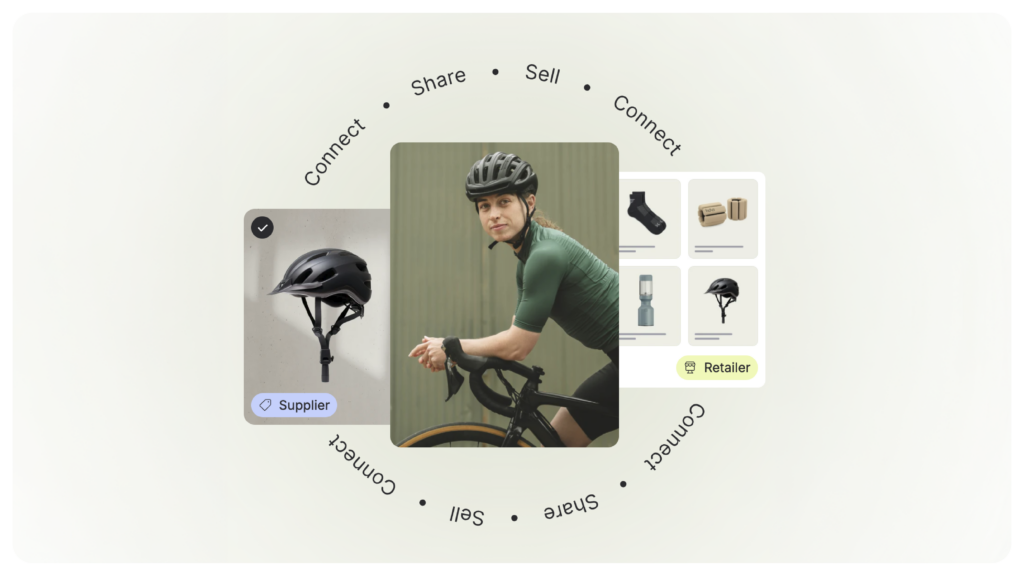
Shopify Collective is a built-in sales channel that connects two kinds of stores. Retailers list and sell products they source from other Shopify brands. Suppliers make those products available and handle fulfillment. Both sides stay inside one ecosystem, which is what separates it from traditional dropshipping. Instead of routing orders to unknown overseas vendors, you work with Shopify merchants whose catalogs, shipping, and reliability are visible from the start.
It is also distinct from Shopify’s native B2B tools, which became available across paid plans in early 2026. Native B2B is built for selling wholesale to your own business buyers with company profiles and negotiated pricing. Collective is built for sourcing and distributing products between independent stores. The two solve different problems, and confusing them leads to the wrong setup.
How It Works for Retailers and Suppliers
For a retailer, the flow is direct. You browse a supplier’s price list, import the products you want, and sell them under your own brand at prices you control. When a customer buys, the order routes to the supplier, who ships it and gets paid automatically once it leaves the door. You only pay for what you sell, and retailers commonly hold margins in the 20 to 40 percent range depending on the category and the supplier terms.
For a supplier, Collective opens a new distribution channel without a new marketing budget. You assign products to specific retailers through price lists, set the margins you are comfortable with, keep control of fulfillment, and collect payment the moment an order ships. Your products reach established storefronts and their existing traffic, which lowers customer acquisition cost on incremental sales.
Underneath both roles sits a set of automations that carry the operational load. Customers check out once even when a cart mixes products from several brands. Shipping is calculated at checkout using each supplier’s real rates by weight and destination. Payouts split automatically on fulfillment, inventory syncs in near real time to prevent overselling, and returns follow rules the retailer defines. Eligibility depends on your plan, your region, your currency, and having Shopify Payments active, and availability has widened well beyond the original US launch. Because the supported list keeps changing, the current requirements page is the reliable source before you build a plan around it.
The Proof: Curated Partnerships That Convert
The brands that get the most out of Collective treat it as a merchandising decision, not a volume play. Luxury footwear label Larroudé added 17 complementary brands and six new categories to its range, and 82 percent of the resulting sales were net new. Their case study is a clear picture of curation done well.
Others show the same pattern from different angles. Ten Thousand ran a co-branded limited edition with GORUCK that drove 16 percent net new sales, documented in Shopify’s write-up. Cozy Earth used cross-selling between portfolio storefronts to generate a large share of its revenue from partner products. The through line is consistent: complementary, brand-aligned assortments outperform random catalog depth, because they extend the customer experience instead of cluttering it.

Where the Built-In Model Reaches Its Limits
Collective is a partnership and merchandising channel, not a marketplace engine, and a scaling operation eventually feels that boundary in specific ways.
Suppliers apply a single discount across an entire catalog, so per-product margin control gets difficult when your mix spans very different price points and cost structures. Product data such as tags, barcodes, and custom metadata may not transfer cleanly on import, which leaves catalogs needing manual cleanup. Live listings can break with little warning if a supplier removes a retailer, so high-priority products need backup sources. There is no built-in messaging between partners and no supplier performance reporting, which pushes relationship management and quality tracking outside the tool entirely.
The automation ceiling matters too. Connections run through the Collective apps rather than a full API, price lists are editable only in the interface, and overselling protection works with standard checkout but not with manually created orders. A store running a handful of curated partners rarely feels any of this. For an operation managing dozens of vendors, custom margin logic, and high order volume, these limits define the moment the native feature stops keeping up. That is a signal of growth, not a defect.
When to Build a Custom Marketplace With Shopify Collective as the Foundation
The right response to outgrowing the defaults is to extend Shopify, not abandon it. When your model calls for many vendors, tiered or per-SKU margins, automated vendor onboarding, richer product data, granular performance dashboards, or a storefront that behaves like a true marketplace, custom development supplies what Collective was never designed to do.
Shopify’s developer platform supports the pieces a real marketplace needs: custom vendor portals, onboarding flows that scale, data pipelines that keep product information accurate across every partner, and marketplace-grade search and merchandising. You keep the checkout, payments, and infrastructure that already convert, and you layer on the logic your business actually runs on. Building on top of the platform also protects the investment you have already made, since you are extending a system your team knows rather than migrating to something unfamiliar.
Collective answers the first question well: can you sell together without the overhead. The next step, scaling that into a marketplace built around your catalog, your margins, and your customer experience, is a development decision. If you are mapping what a custom marketplace on Shopify could look like for your business, our team can help you scope and build it.