In most organizations, databases are treated as a background concern; something that simply needs to work and will continue to work the same way it always has. As long as applications load, reports run, and data exists somewhere, the infrastructure underneath rarely gets strategic attention.
That mindset holds until it doesn’t.
As organizations scale, data stops being a passive asset and starts shaping everything: product decisions, operational efficiency, AI initiatives, customer experience, and risk exposure. At that point, the way data is structured, governed, and evolved becomes a determining factor in whether a company moves quickly with confidence or slowly with fragility.
When designed intentionally, enterprise data infrastructure becomes a competitive advantage.
What Is Enterprise Data Infrastructure?
Enterprise data infrastructure is not defined by a specific database technology or cloud provider. It is defined by intentional design around how data is created, stored, accessed, and evolved over time.
At its core, enterprise-grade data infrastructure accounts for growth, reliability, and change. It recognizes that data will serve different purposes (operational workflows, analytics, reporting, automation, and AI) and that each of those uses places different demands on the system.
This often means designing clear boundaries between operational databases and analytical systems, enforcing consistent data models, and building pipelines that move data predictably rather than opportunistically. It also means treating data architecture as a living system, not a one-time implementation.
Data Infrastructure as the Bottleneck
Early-stage systems are often built for speed. A single database supports multiple use cases, such as schemas evolving organically and reporting queries running against production data. These decisions are reasonable at the time, but they accumulate costs that become harder to spot as time goes on.
As the business grows, those costs surface in damaging ways. This is where your team might struggle to answer basic questions with confidence; performance degrades under load; and changes that should be simple require coordination across multiple departments and systems. Plus, AI and analytics initiatives stall because data is inconsistent, inaccessible, or poorly modeled.
The issue is rarely data volume alone. More often, it’s that the infrastructure was never designed to support multiple consumers of data at scale, applications, analysts, machine learning models, external integrations, and leadership dashboards all competing for the same foundations.
This was the case for one of our closest partner. In late 2022, Doorify MLS relied on a single vendor for both software integrations and data distribution, creating a bottleneck that stifled their ability to innovate and grow. This dependence put their ambitious plans for expansion and technological progress at risk. Read their case study to learn more about how we helped solve this problem.
Scalable Database Architectures
One of our proudest projects was built around the knowledge that the way data moves in the Real Estate industry is essential to keep multi-billion-dollar transactions moving forward nationwide. That’s why when SourceRE approached us, the vision was to build an industry-grade marketplace where MLSs, regulators, and PropTech companies could interact around clean, verified data with full transparency. This meant we needed to redefine how the real estate ecosystem manages, governs, and monetizes information.
The same lessons we learned while building that project can be applied to any other business, regardless of the context in which they operate: scalability in enterprise databases is about handling more complexity without increasing the fragility of the entire ecosystem.
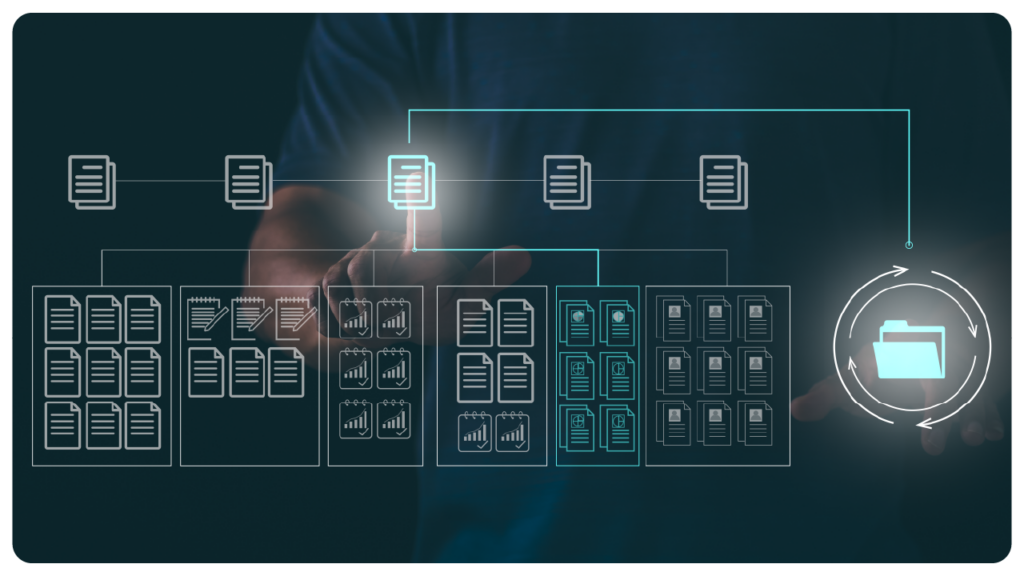
Well-designed architectures separate concerns cleanly. This might mean that transactional workloads are optimized for reliability and performance; analytical workloads are optimized for insight and exploration, and integration points are explicit. This separation reduces contention and allows systems to evolve independently.
Skipping this step could lead to your business being trapped in architectures where every new feature increases risk. Over time, database changes become the slowest part of delivery because the system no longer supports safe iteration.
Data Models That Scale
Data models are one of the most overlooked sources of long-term friction. Early schemas are often shaped by immediate needs rather than future flexibility, leading to tightly coupled structures that are difficult to extend or reason about.
Enterprise-ready data modeling emphasizes clarity and stability to favor well-defined entities, explicit relationships, and conventions that remain understandable as teams change. Strong models reduce the cognitive load on engineers, analysts, and downstream systems alike.
When data models evolve intentionally, they enable faster development, more reliable reporting, and smoother integration with new tools, including AI systems that depend heavily on clean, well-structured data.
How to Modernize Legacy Databases Without Breaking Production
Few enterprises have the luxury of starting with a clean slate. Most rely on legacy databases that sit at the center of critical operations; billing, fulfillment, reporting, customer data, and compliance. These systems often work well enough to keep the business running, which makes them difficult to change without introducing risk. The challenge is not whether to modernize, but how to do it without disrupting production.
- Understand the Current System
Successful database modernization begins with understanding the current system as it exists today, not as it was originally designed. Over time, most legacy databases accumulate implicit dependencies (i.e. reports querying production tables directly, integrations built on undocumented assumptions, or business logic embedded in stored procedures). Before making changes, teams need a clear picture of how data is being used across the organization. This visibility allows modernization efforts to focus on the most fragile or high-impact areas first, rather than attempting broad changes that create unnecessary exposure.
- New Layers
One of the safest ways to begin modernization is by introducing new data layers instead of modifying core systems directly. This often means adding read replicas, data warehouses, or event-based streams that offload reporting, analytics, and experimentation from transactional databases. By reducing the number of workloads competing for the same resources, organizations can improve performance and stability immediately, while creating a controlled environment for future evolution.
- Business Logic
Decoupling business logic from the database layer is also a critical step in long-term modernization. In many legacy systems, complex logic lives inside the database itself, tightly coupling data structure to application behavior. Over time, this makes change increasingly risky. Modernization efforts often involve moving this logic into application or service layers where it can be versioned, tested, and evolved more safely. This transition does not happen overnight, but each piece of logic moved reduces future constraints.
- An Ongoing Effort
Legacy databases rarely fail all at once; they fail through accumulation of small risks that eventually compound. Organizations that modernize successfully set clear principles (such as where new features should live, how data access is governed, and which systems are considered authoritative) and apply them consistently over time. Progress is measured not by how quickly the legacy system disappears, but by how much safer and more adaptable the overall data ecosystem becomes.
Ultimately, modernizing legacy databases without breaking production requires restraint as much as ambition. It is a process of reducing risk step by step, creating parallel paths forward, and allowing new systems to earn trust before old ones are retired.

Data Infrastructure as the Foundation for AI and Analytics
Data integration is a main priority for enterprise executives, with 82% of senior executives considering scaling AI a top priority. However, AI initiatives often fail long before models are deployed. The root cause is rarely algorithmic sophistication. It is almost always data readiness. Enterprise AI depends on reliable pipelines, consistent semantics, and governed access to data. Without these foundations, teams spend most of their time reconciling inconsistencies rather than delivering intelligence.
Designing data infrastructure with AI and analytics in mind means thinking ahead about how data will be consumed, labeled, and maintained. When done correctly, AI becomes an extension of existing systems rather than a fragile add-on.
Operational vs Analytical Data
As enterprise systems mature, one of the most important architectural distinctions to make is between operational data and analytical data. While both originate from the same business activity, they serve fundamentally different purposes and place very different demands on the infrastructure that supports them.
Operational data is the data that powers day-to-day business activity. It supports transactions, user interactions, and real-time workflows such as orders being placed, records being updated, or users authenticating into a system. This type of data prioritizes accuracy, consistency, and availability. Because it sits directly on the critical path of the business, it is typically stored in transactional databases designed for high reliability and low latency. These databases are tightly coupled to application logic and are optimized to handle many small, fast operations safely.
Analytical data, by contrast, exists to support understanding rather than execution. It is used for reporting, trend analysis, forecasting, and increasingly for machine learning and AI workloads. Analytical data emphasizes history, aggregation, and exploration over immediacy. Instead of asking “what is happening right now,” it answers questions like “what has happened over time,” “why did it happen,” and “what is likely to happen next.”
Because of these differences, analytical data typically lives outside of core operational systems. It is often stored in data warehouses, data lakes, or specialized analytical platforms that are designed to handle large volumes of data, complex queries, and evolving schemas. These environments allow teams to ask deeper questions without risking the performance or stability of production systems.
In a well-designed enterprise data infrastructure, operational and analytical data are connected but not conflated. Data flows from operational systems into analytical environments through well-defined pipelines, ensuring that insights are derived from accurate, governed sources while keeping production workloads isolated. This separation allows each layer of the infrastructure to be optimized for its purpose: operational systems remain fast and dependable, while analytical platforms remain flexible and insight-driven.

Designing Reliable Data Pipelines at Enterprise Scale
Data pipelines are the connective tissue of modern enterprises. They move data between operational systems, analytical platforms, reporting tools, and increasingly AI-driven applications. When pipelines work well, data feels dependable and accessible. When they don’t, trust erodes quickly and teams begin questioning numbers, duplicating work, or building shadow systems to compensate.
Characteristics of an Enterprise Scale Data Pipeline:
- Clarity: Reliable pipelines are designed around explicit data contracts that define what data is produced, in what structure, and with what guarantees. This reduces the risk of downstream breakage when upstream systems evolve. Without these contracts, small changes in source systems can silently cascade into reporting errors or failed analytics, often discovered only after decisions have already been made.
- Observability: Teams should be able to see when data arrived, whether it was complete, and where failures occurred. This means designing pipelines that surface metadata, such as freshness, volume, and schema changes, rather than treating data movement as a black box.
- Recoverability: At scale, failures are inevitable: network interruptions, upstream outages, malformed data, or infrastructure changes will occur. Reliable pipelines assume this reality and are designed to recover gracefully. This often means supporting idempotent processing, replaying historical data safely, and isolating failures so they do not corrupt downstream systems
- Predictability: Downstream teams need to know when data will be available, how often it updates, and what latency to expect. Enterprise pipelines are designed with consistent schedules, clear ownership, and documented behaviors. This predictability enables analysts, product teams, and AI systems to plan around data availability instead of reacting to it.
Multi-Tenant and Multi-Brand Data Infrastructure
For enterprises operating multiple brands, regions, or business units, data architecture must balance isolation with shared insight.
Poorly designed multi-tenant systems either over-isolate data, preventing useful aggregation, or under-isolate it, creating security and governance risks. Enterprise-grade architectures define clear tenancy boundaries while still enabling controlled visibility across the organization.
This balance becomes especially important in PE-backed environments, marketplaces, and platform businesses where data complexity grows rapidly.
Data Governance, Security, and Access Control
As data becomes more valuable, governance becomes unavoidable. Enterprise data infrastructure must support role-based access, auditability, and compliance without slowing teams down.
Strong governance is not about restriction. It is about enabling safe access at scale. When access rules, ownership, and accountability are clear, teams spend less time negotiating permissions and more time delivering value.
Centralized vs Decentralized Data
There is no universally correct answer to where enterprise data should live. Centralized architectures emphasize consistency, governance, and shared visibility, while decentralized models prioritize flexibility, speed, and team-level ownership. Most mature organizations eventually adopt a hybrid approach, but reaching that balance requires intentional design rather than default decisions.
The most useful way to approach this choice is not by debating architecture patterns in isolation, but by asking questions that reflect how the organization actually operates today, and how it expects to operate in the future.
A good starting point is understanding decision-making needs. Leaders should ask whether the business relies on a single, authoritative view of data to make strategic decisions, or whether different teams can operate independently with local interpretations. Factors to consider:
- Organizational structure: How autonomous are teams expected to be? Do teams own end-to-end outcomes, or do they depend heavily on shared services?
- Data governance and risk tolerance: Who is responsible for data quality, access, and compliance today? What happens when data is wrong or misused?
- Growth trajectory: How quickly is the organization growing, and how often are new systems or data sources introduced?
- Future capabilities: How important are analytics, AI, and cross-functional insights to the business? Will these capabilities require combining data across teams or domains?
In practice, the most resilient enterprise data infrastructures are designed to evolve. Core, high-value data is centralized where consistency and trust are essential, while domain-specific data is decentralized where speed and autonomy create leverage. By asking the right questions upfront, organizations avoid rigid architectures and instead build systems that adapt as the business grows.
Data as an Asset
Enterprise data infrastructure is not something to be solved once and forgotten. It is an evolving system that reflects how a business operates, grows, and competes.
When designed thoughtfully, data infrastructure reduces friction instead of creating it. It enables intelligence rather than blocking it. And over time, it becomes one of the strongest indicators of an organization’s ability to scale sustainably.
For businesses reaching a stage where data is shaping outcomes more than ever, investing in enterprise-grade data architecture is a strategic decision.