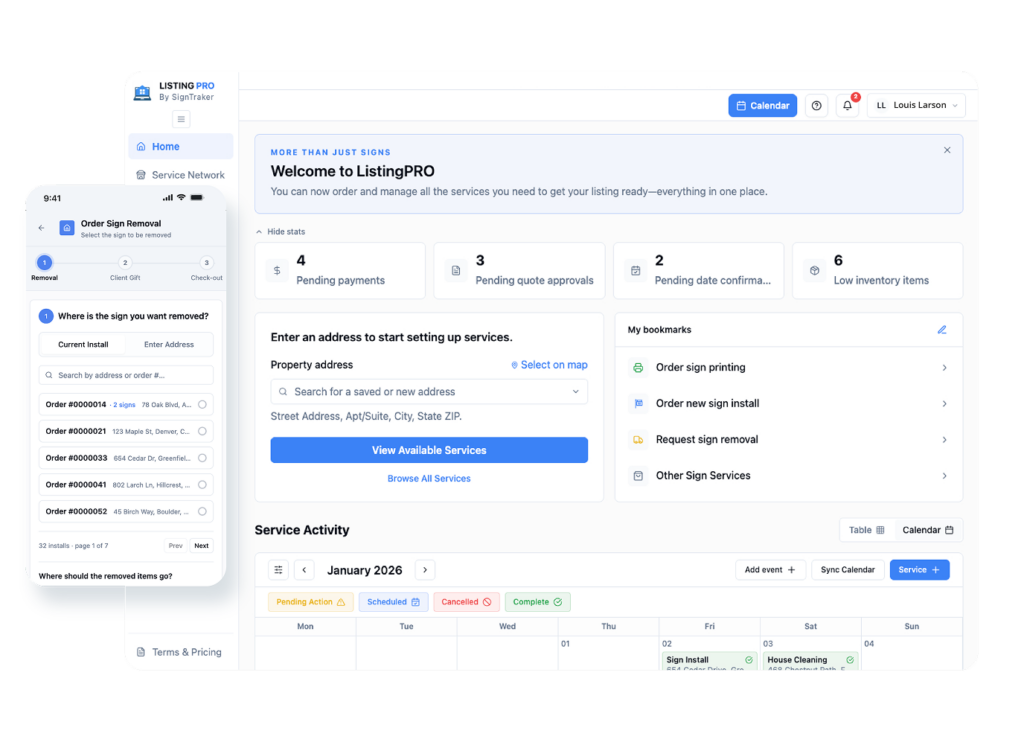
SignTraker
SignTraker Connect: Validating the Opportunity Before Building the Product
Industry
Real Estate, Technology, SaaS
- Design
- Strategy
Overview
SignTraker came to us with a concept and an ambition to grow their revenue streams. Before committing budget to a build, they wanted the answer to a harder question than whether the thing could be built. They wanted to know if the opportunity was real, if their users would actually want it, and what it would take to earn adoption. We partnered with them to work through those questions in order, grounded in research and evidence, so that every dollar spent on development went toward something the market had already confirmed.
The engagement spanned business validation, financial modeling, prototyping, and four rounds of user research. By the end, SignTraker had what they came for: a de-risked opportunity, a validated feature set, and the confidence to move forward.
Validating the business opportunity
A concept is a starting point. Proving it deserves investment is the real work. We began with deep market research, pulling comparable products and businesses to understand where the opportunity sat, how similar plays had performed, and where the risks lived.
From there we built financial models grounded in SignTraker's own data and forward projections. We mapped realistic revenue scenarios against their existing customer base and growth trajectory, using their real numbers as the baseline instead of optimistic estimates. That analysis gave everyone a clear-eyed view of the upside, the cost, and the conditions that would need to hold for the concept to pay off. The conclusion was earned through the work: a viable path existed, and it was worth pursuing.
Prototyping and validating with real users
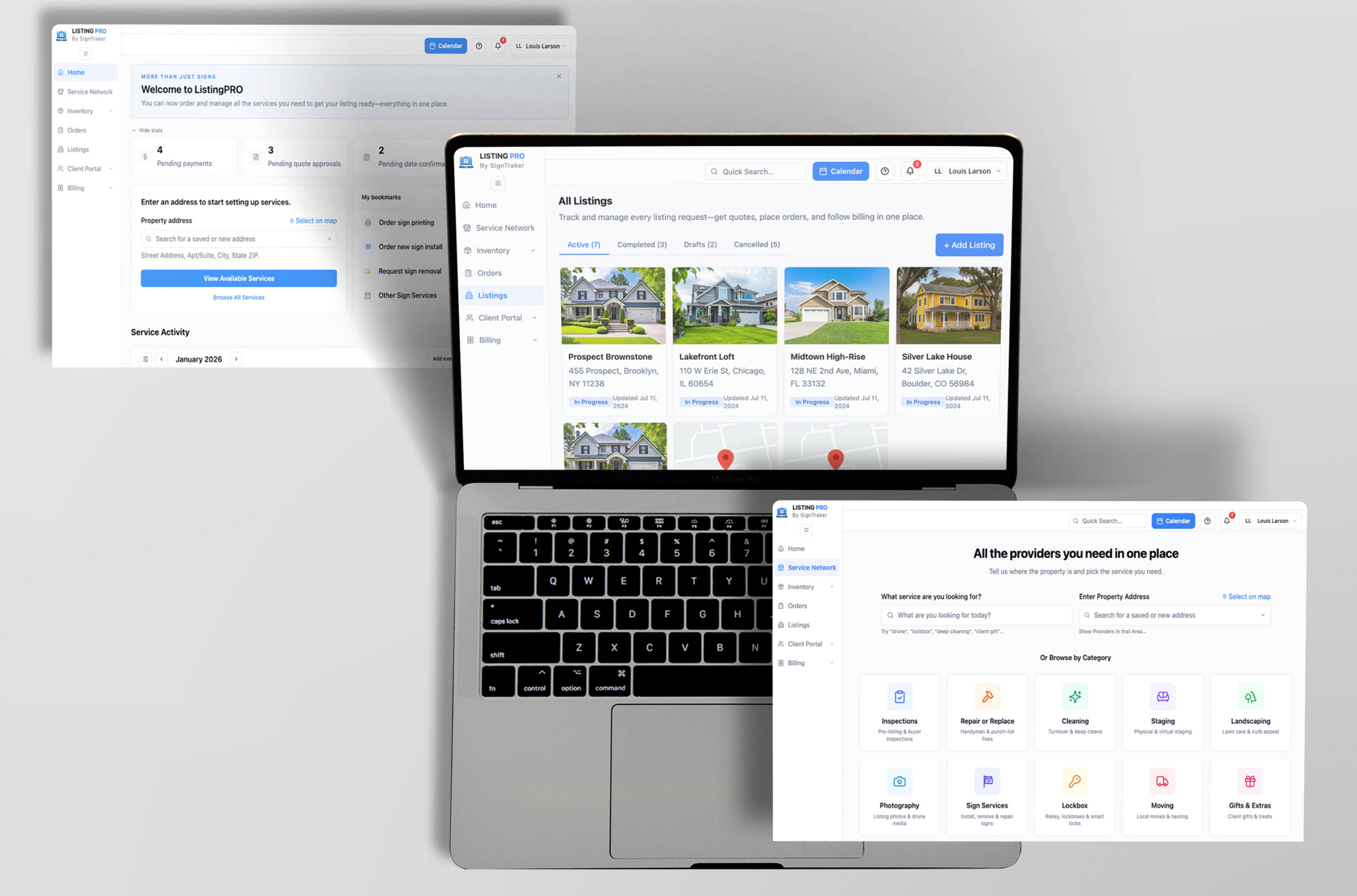
With a business case in hand, we moved from spreadsheets to something users could react to. We designed interactive prototypes and put them in front of real professionals from SignTraker's target audience across four structured rounds of moderated user studies, twelve-plus sessions with eight participants spanning a range of roles and experience levels.
Participants reacted to real workflows instead of hypotheticals, and it showed us what they valued, what they would pay for, and which features they would quietly ignore. That gap, between a feature that sounds good in a meeting and one people will actually pay to use, showed up fast.
Some ideas earned immediate enthusiasm. Other ideas turned out to be nice-to-haves that would have added cost without adding adoption. One veteran participant said he wished he had thought of the concept himself years ago. Reactions like that do not happen when an idea is only mildly interesting.
Refining to a focused MVP
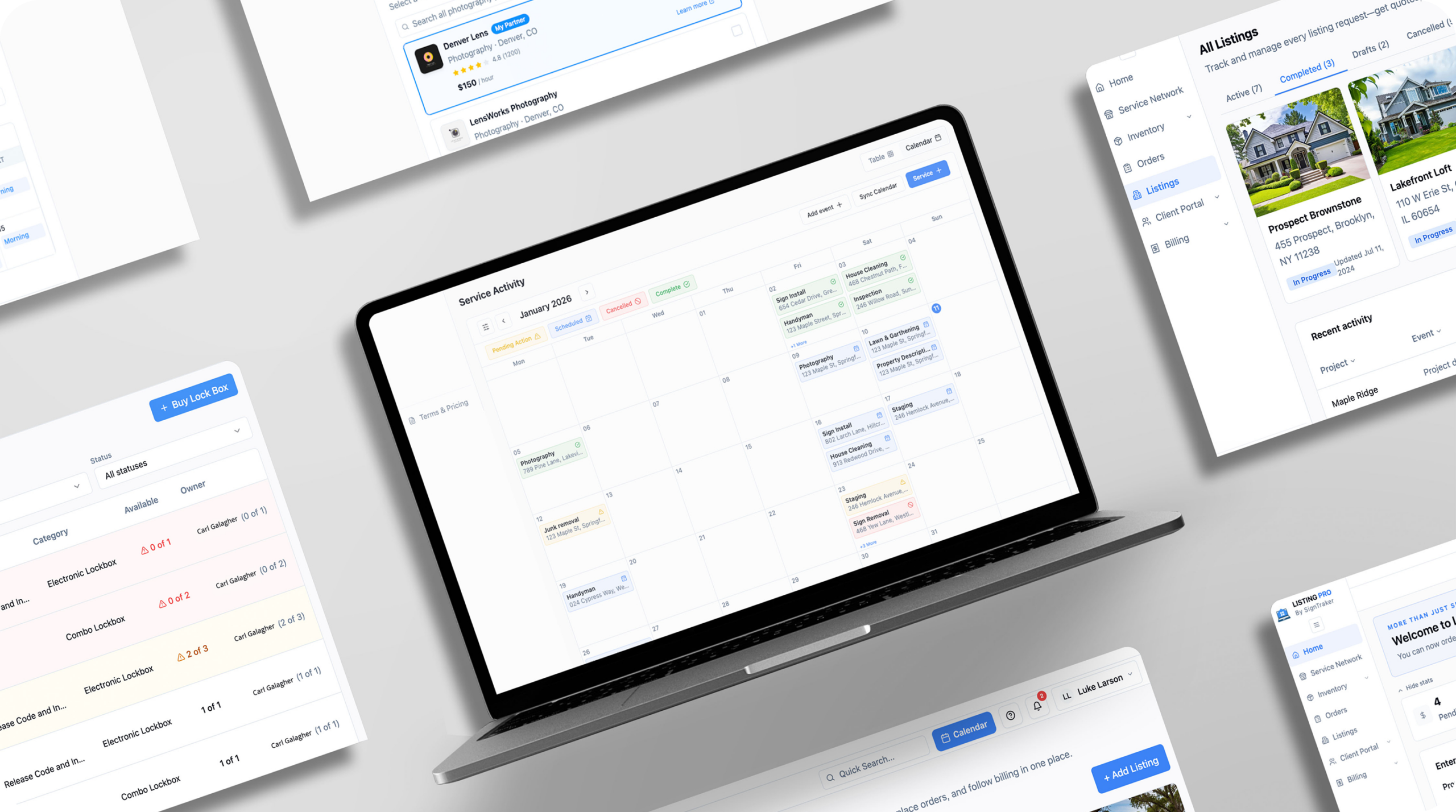
Every round sharpened the picture. We fed real feedback back into the design, trimming what did not earn its place and investing in what did. The result was a feature set defined by evidence and an MVP scoped to deliver the highest-value capabilities first, without the weight of unproven extras.
That discipline matters. SignTraker enters development with a product shaped by its future users and a roadmap sequenced by real demand, not guesswork. The risk of building something the market ignores dropped considerably.

Why It Matters
Most firms will build whatever a client asks for. We wanted SignTraker to know if they should build it before they spent a dollar on it.
SignTraker walked away knowing the investment was worth making, with a clear path to build it. Their team can now build against a roadmap that has already survived contact with real users, instead of a set of assumptions.